Marquise Lab-Grown Diamond Wedding Bands, grown in light.
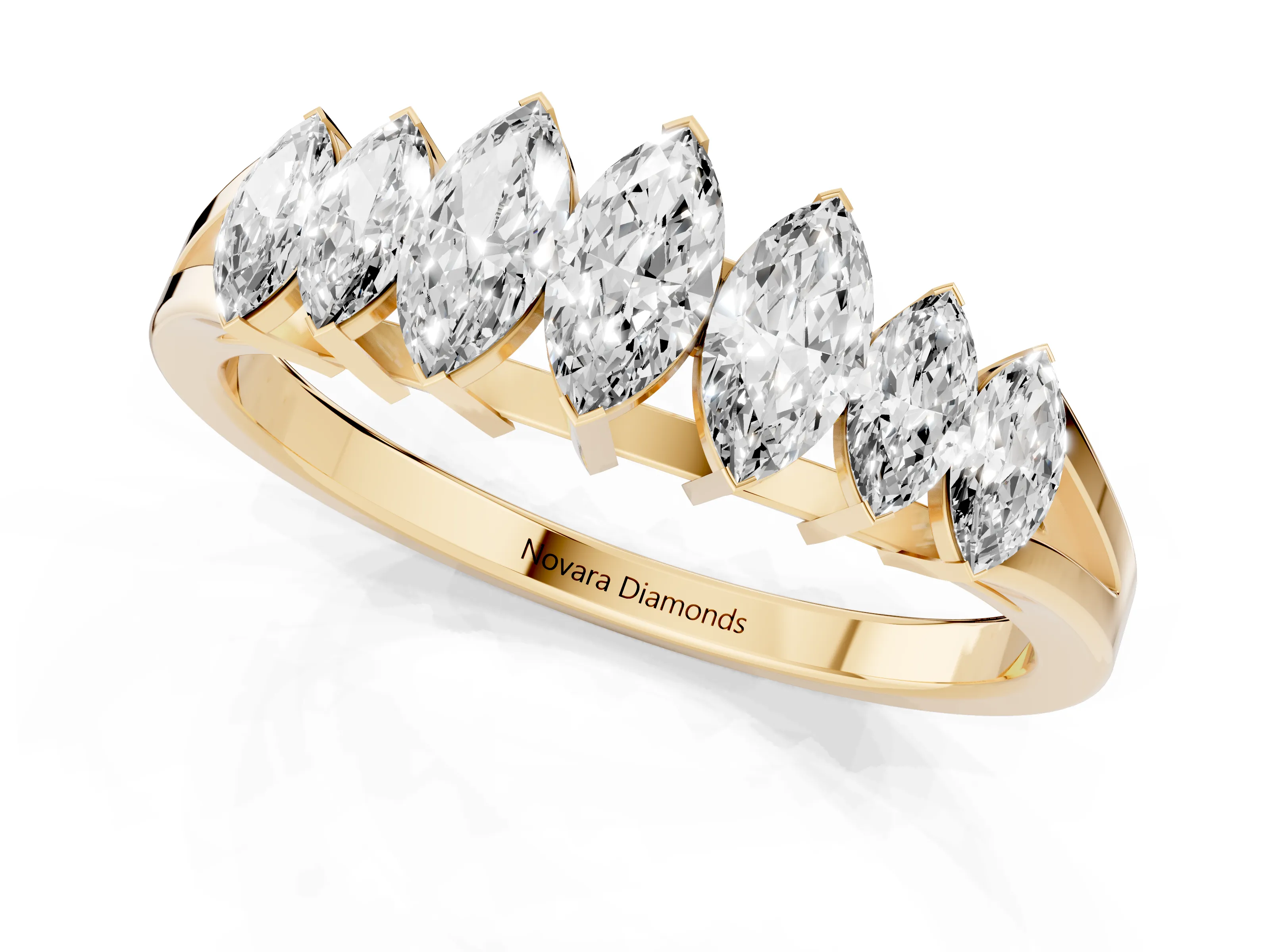
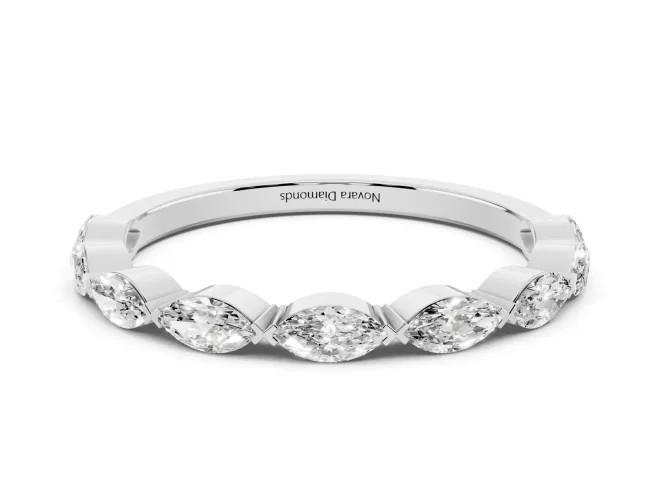
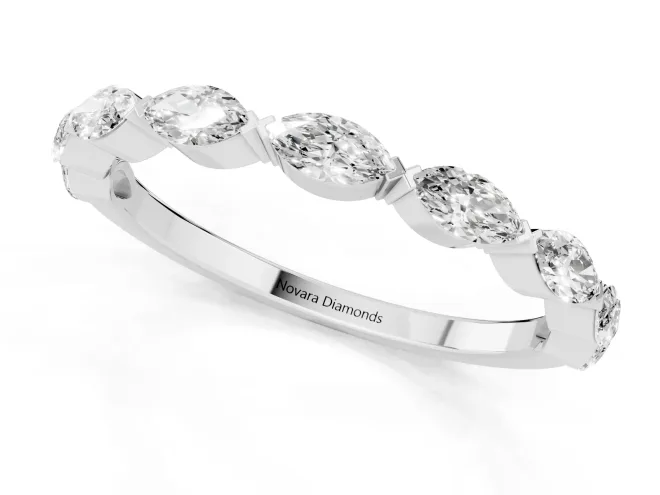
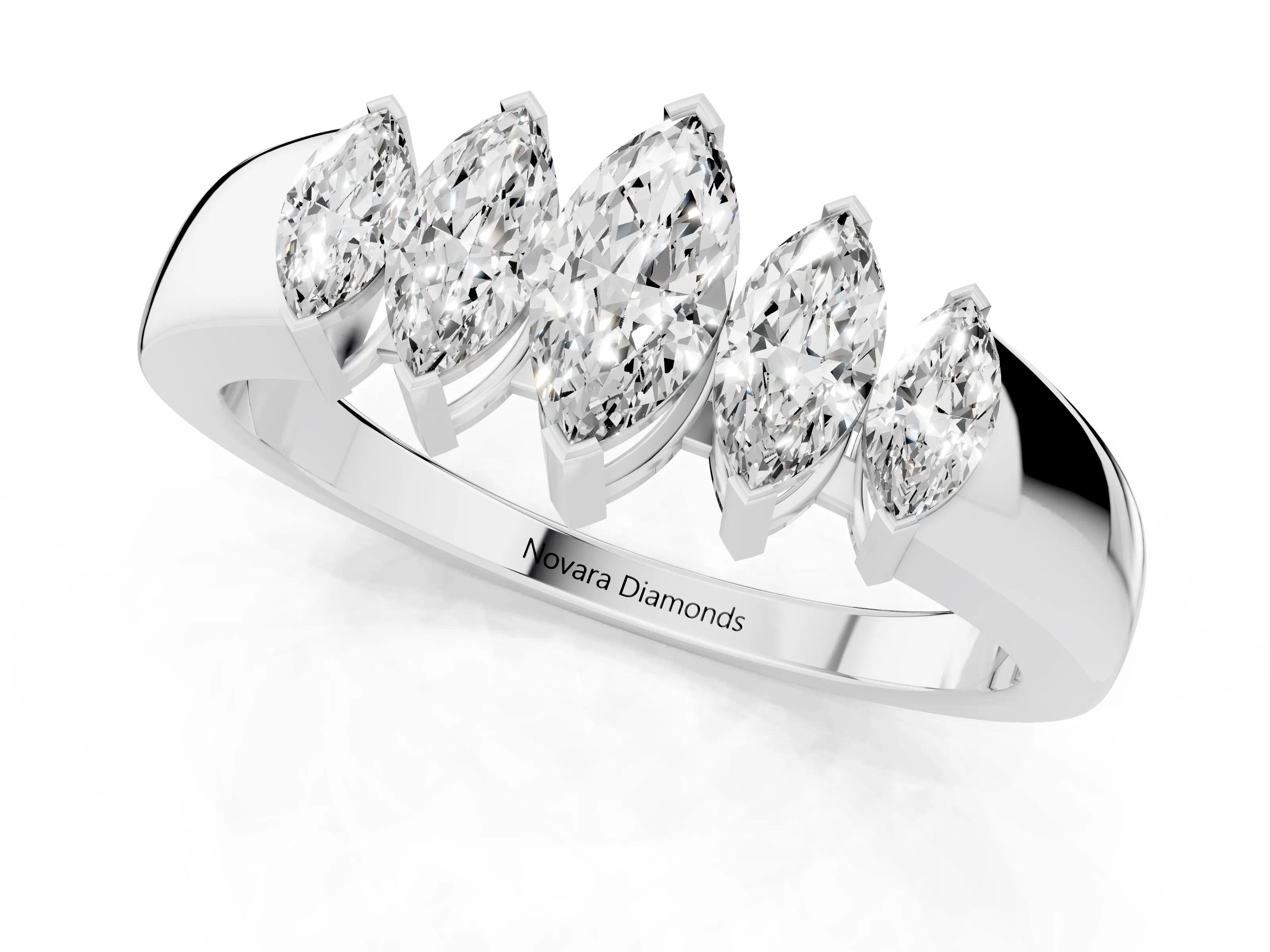
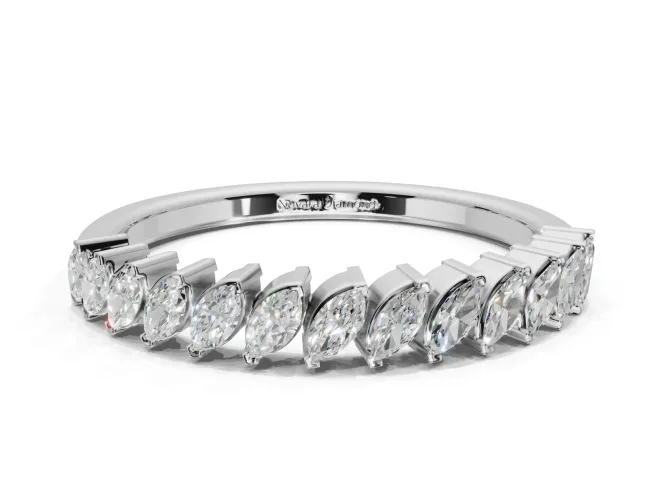
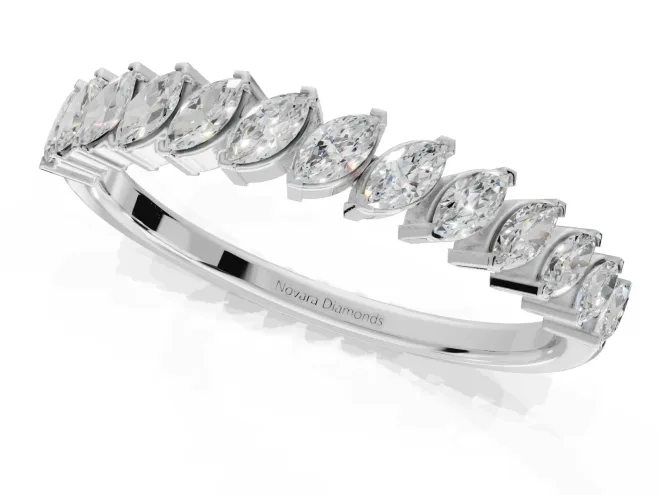
Tapered stones that turn metal into rhythm. Each of these marquise lab-grown diamond wedding bands lines up that slender, pointed cut tip to tip, on a slant, or standing north-south across your finger. Half eternity rows dominate, alongside bar-set and split-shank variations. Metal, gold karat and total carat weight are all selected per product page.


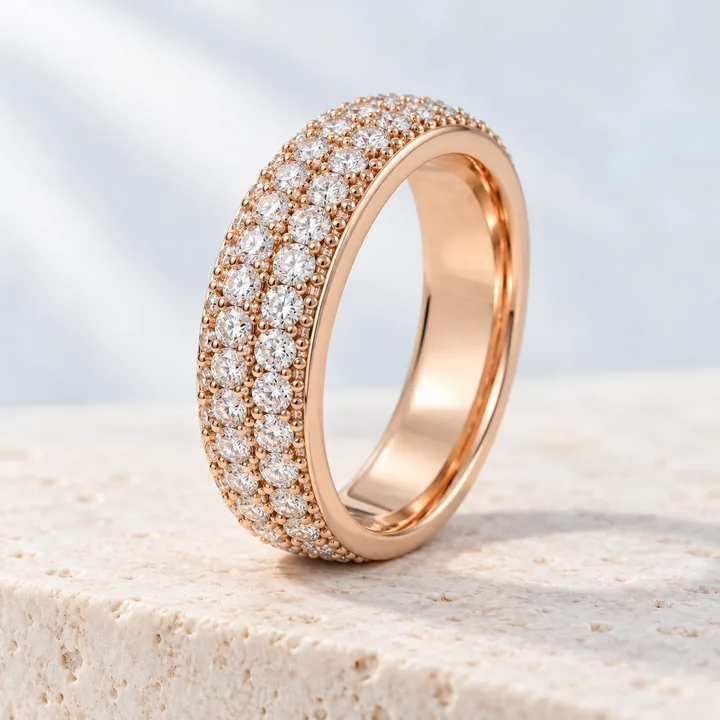
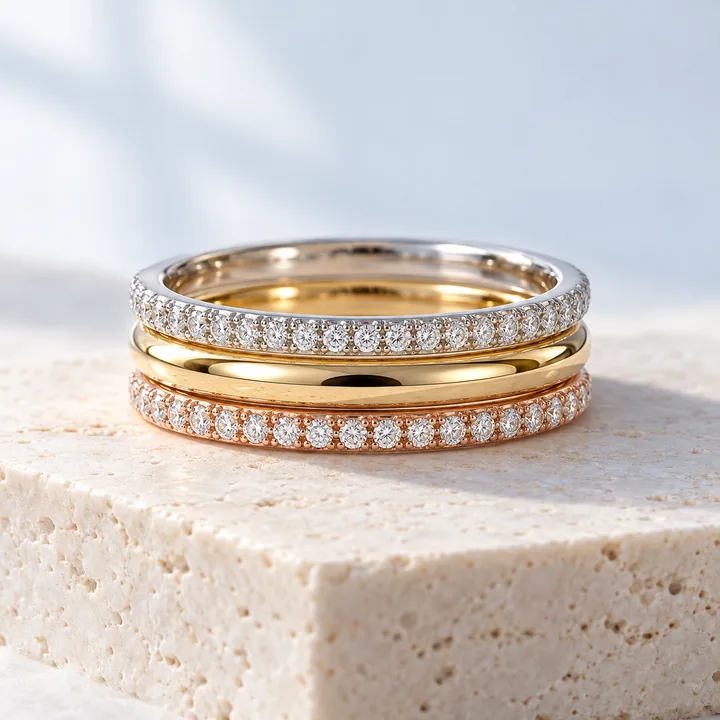
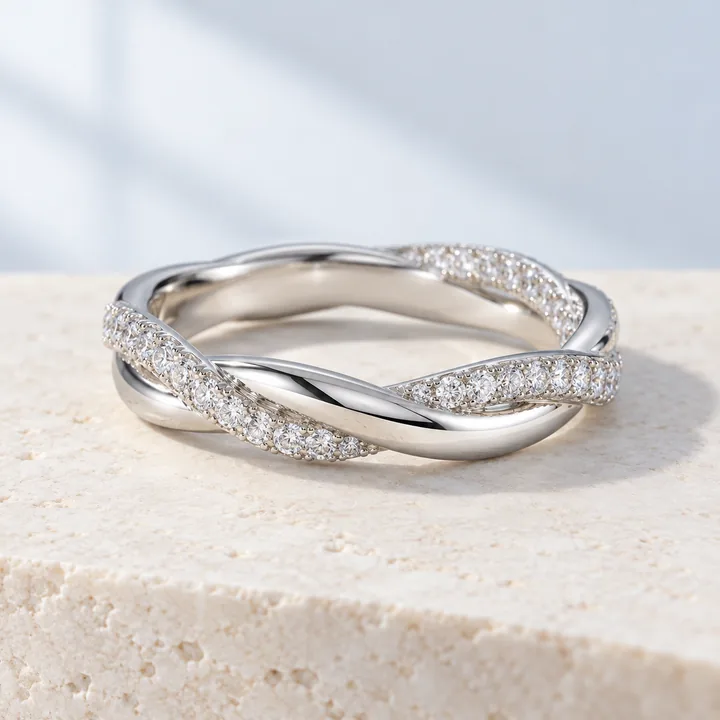
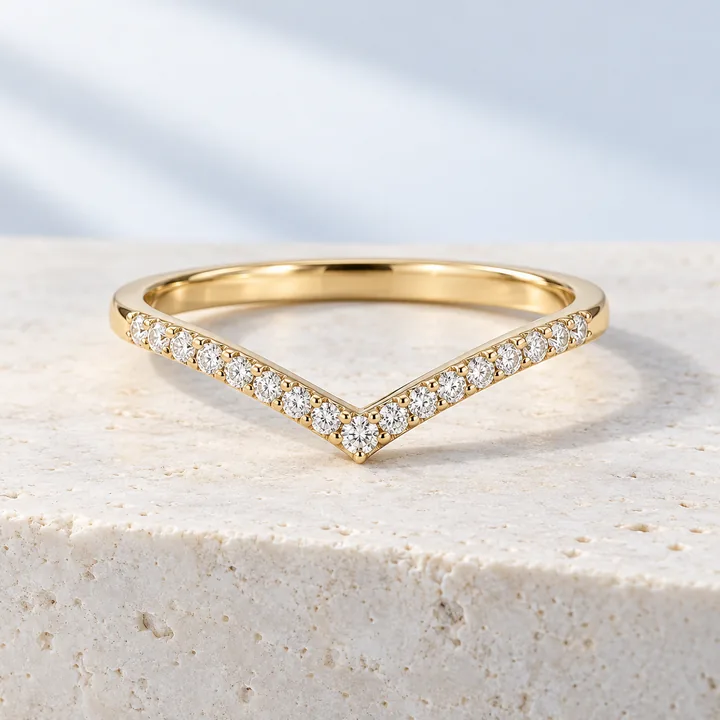

$830 $1,660
$755 $1,510
$760 $1,520
$860 $1,720
$630 $1,260
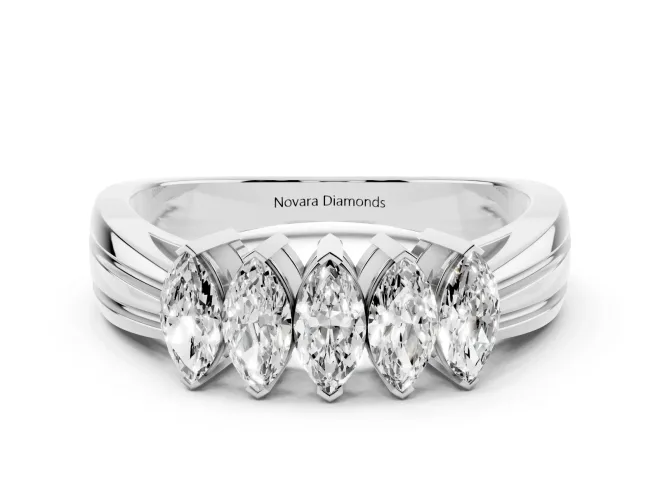
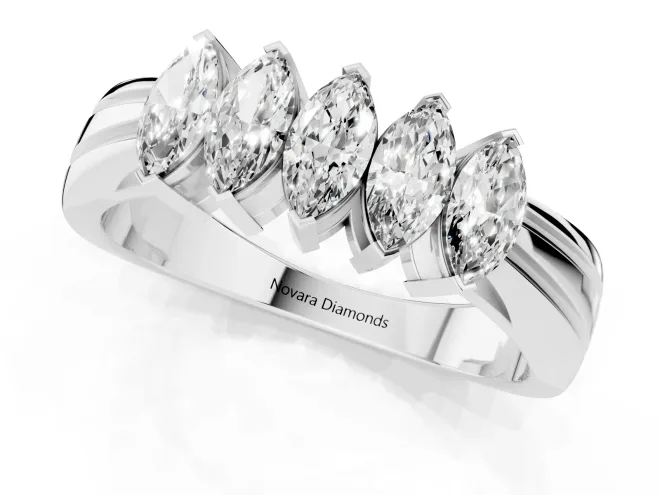
Which way each tip faces
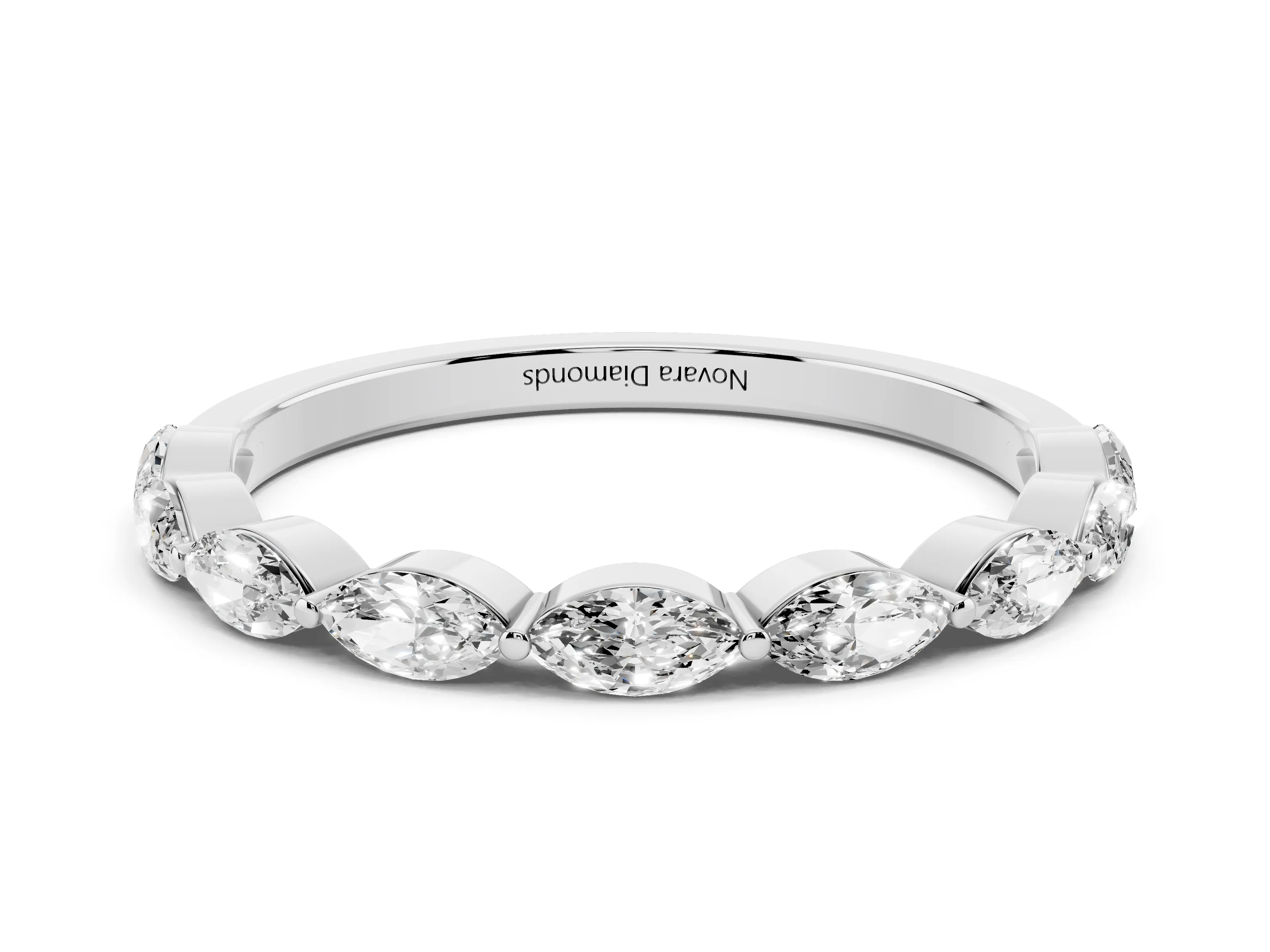
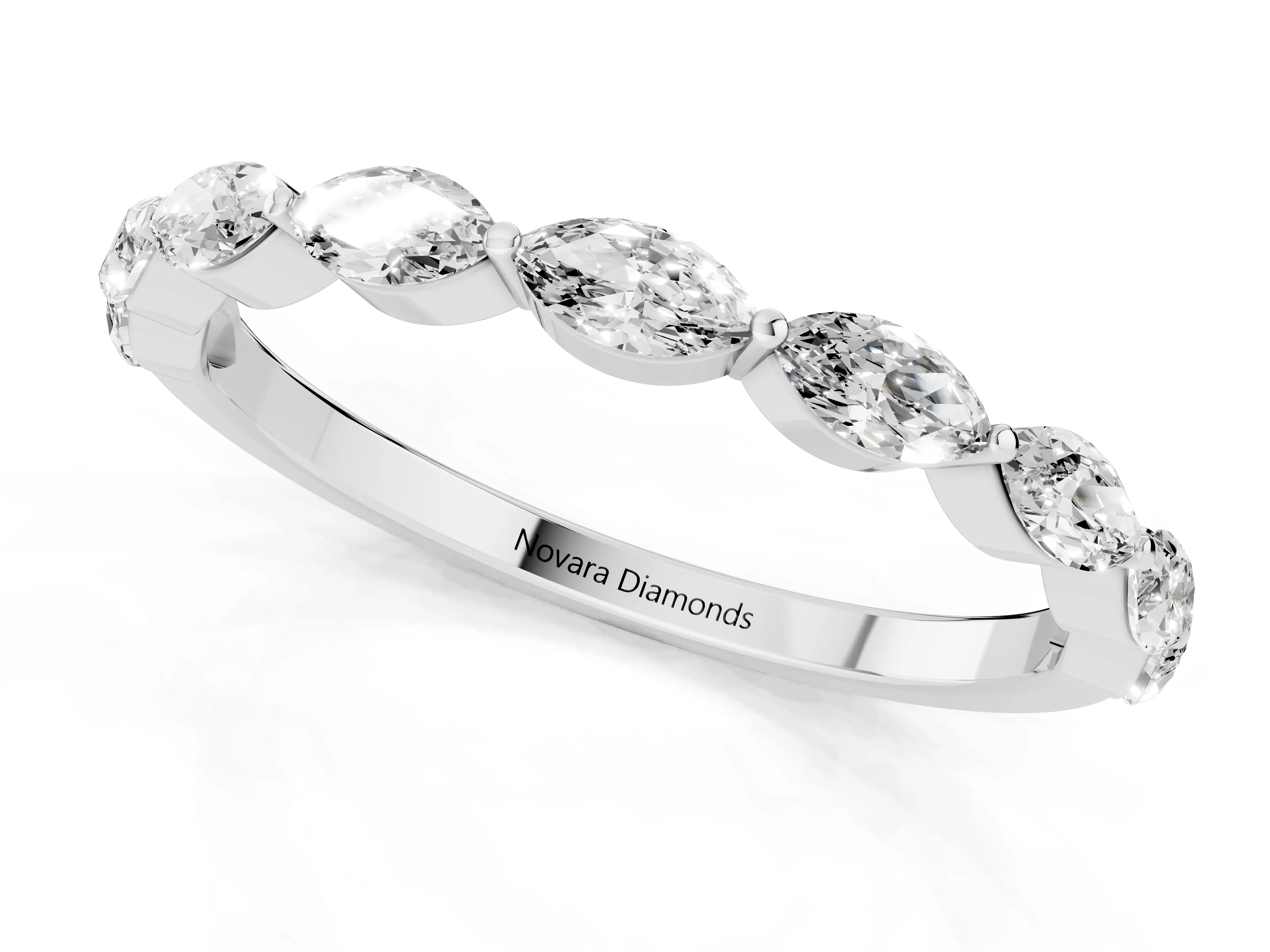
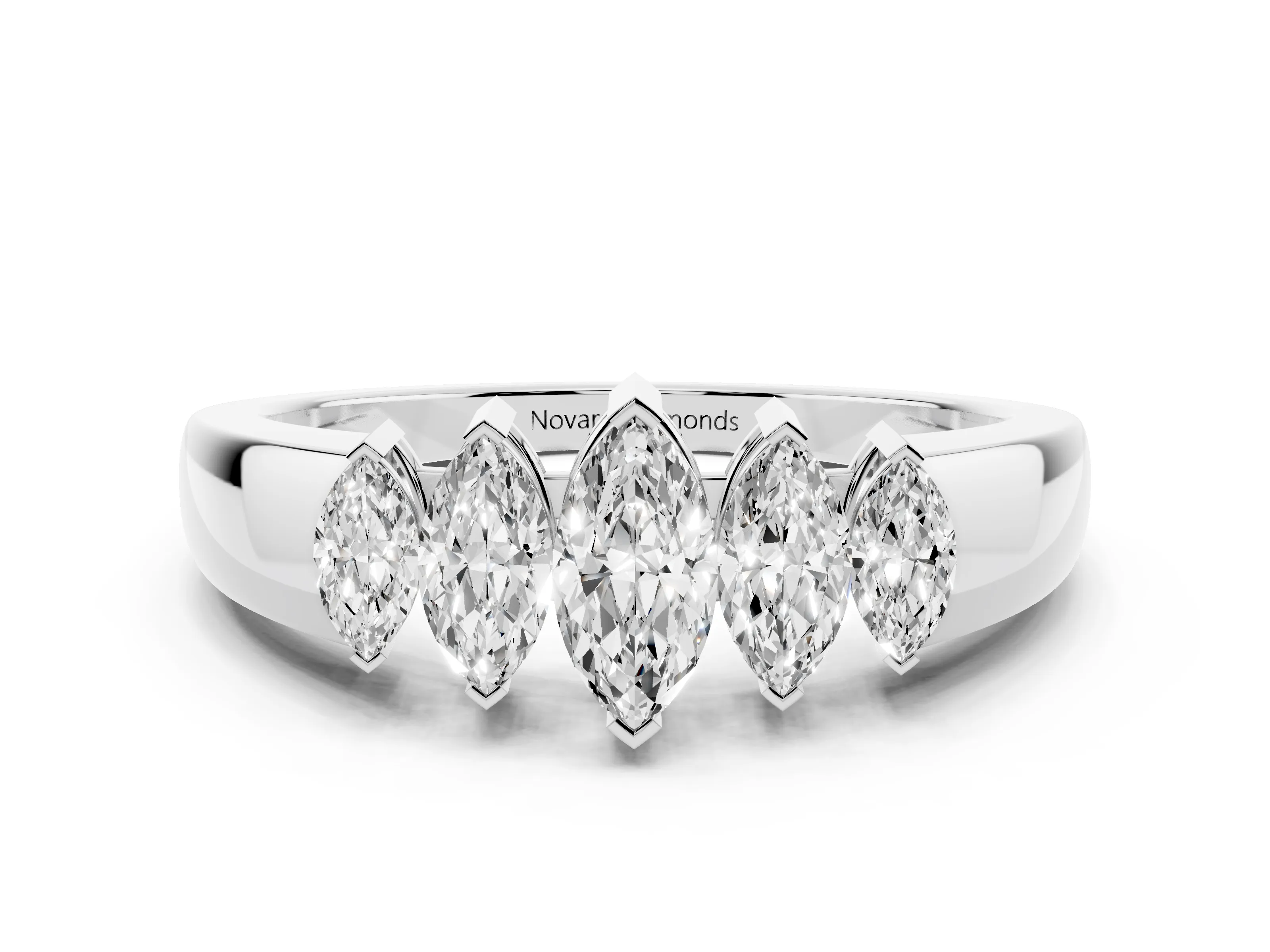
Orientation reshapes a marquise band entirely. Tip-to-tip rows form a thin, continuous seam; angled stones march like leaves on a vine; north-south stones look bold and graphic.
- Tip to tip: slimmest profile, stacks with ease.
- Angled: movement plus a softer silhouette.
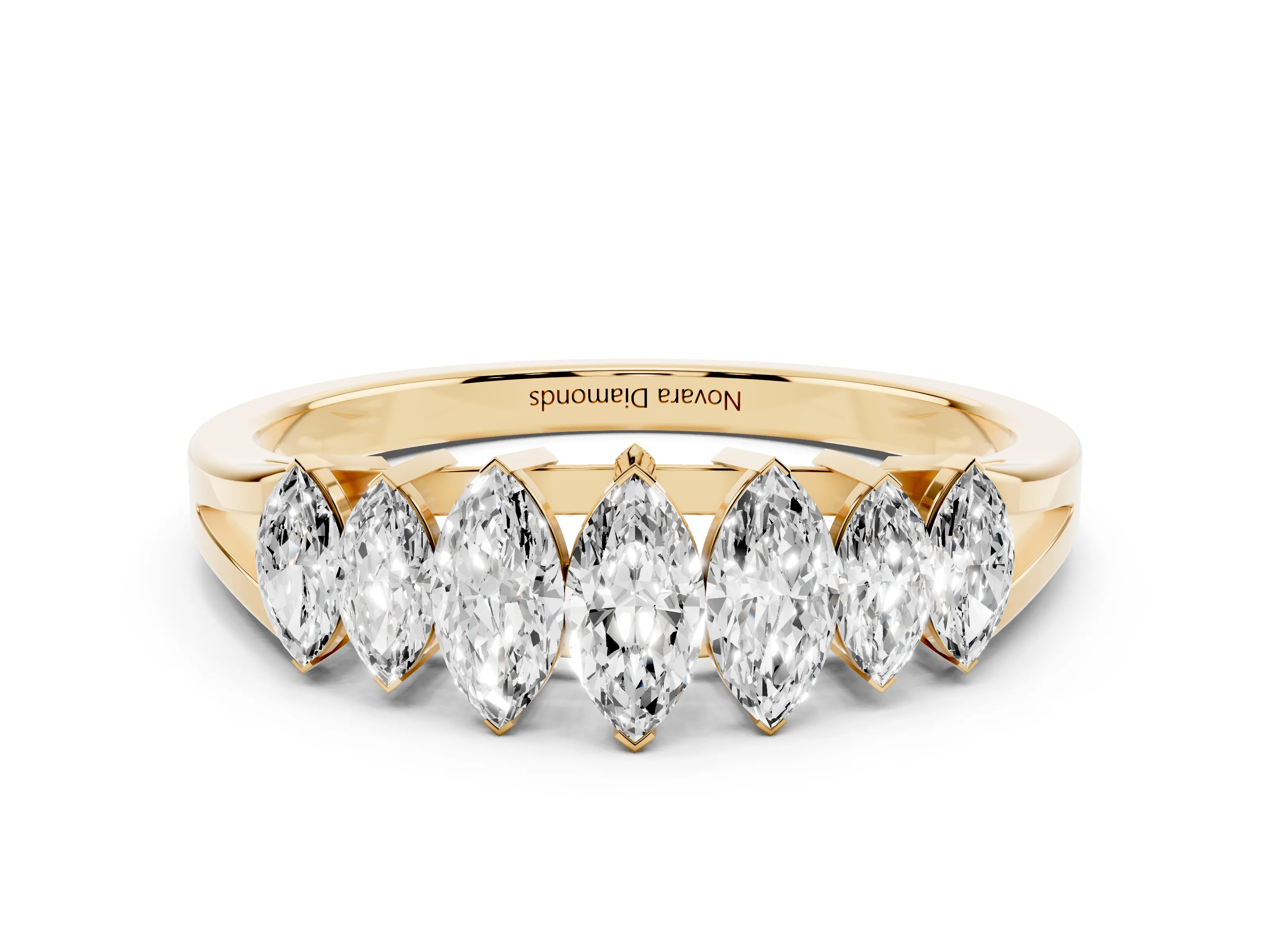
- North-south: points run lengthwise along your finger.
Bars versus prongs
Bar settings grip each stone between short metal posts, leaving flanks open for light. Prong cups at either point shield those two fine tips, this cut's most fragile spots. One design steps its marquise sizes up toward the middle, so the largest stone lands where an engagement ring's head sits.
Carat weight and metal
Most designs come at roughly 1 carat total weight, with choices from 0.35 to 2 carats. Pick 10K, 14K or 18K in white, yellow or rose gold, or go with platinum, or Silvadium, our tarnish-resistant sterling silver.
Guarding those points
Marquise tips absorb knocks before anything else. Slip this band off for lifting or yard work, glance at tip prongs now and then to confirm they're closed, and freshen stones using a soft-bristled brush plus mild suds.
Marquise Lab-Grown Diamond Wedding Bands: Common Questions
What bands look best with a marquise diamond?
Bands that echo its outline or leave room for it work best. A V-split or contoured band tucks beneath a marquise engagement ring without a gap, while a row of smaller marquise lab-grown diamonds repeats that pointed shape. Slim straight bands pair well with low-set solitaires.