Lab-Grown Diamond Tennis Bracelets, grown in light.
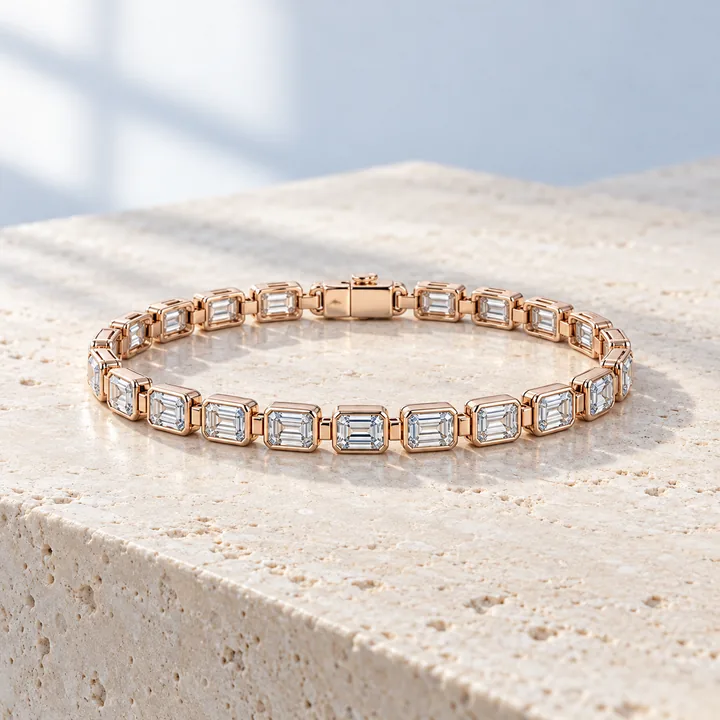
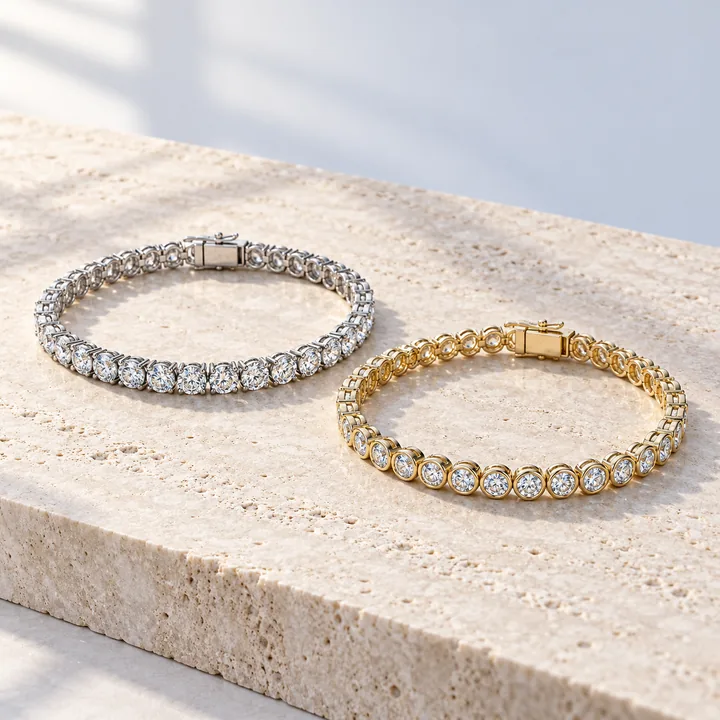
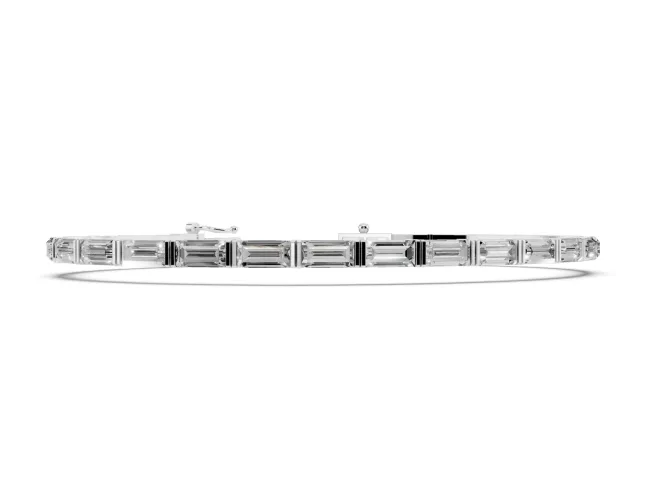
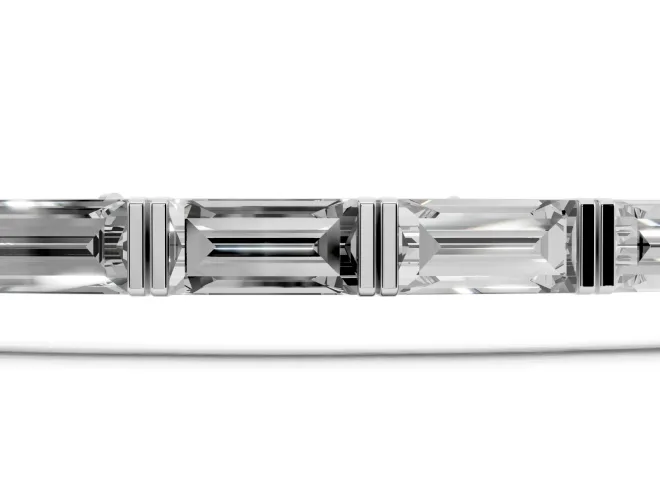
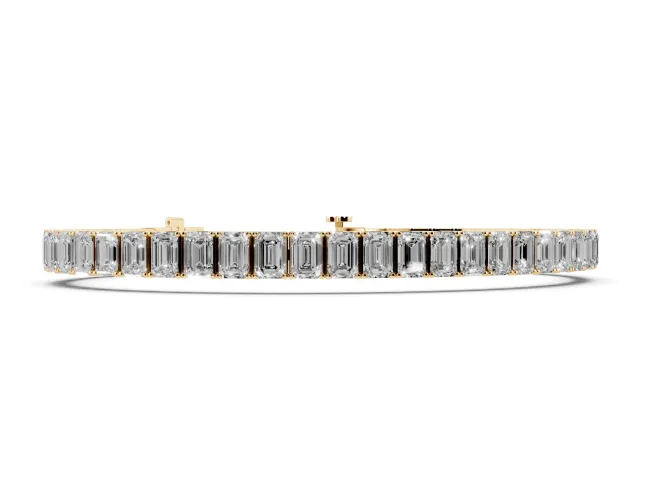
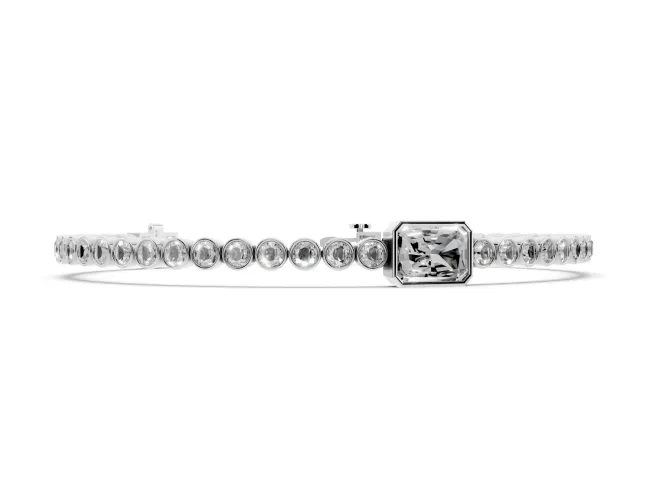
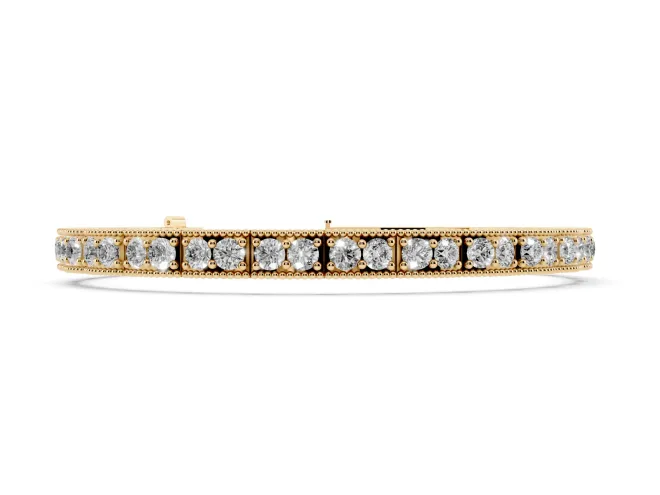
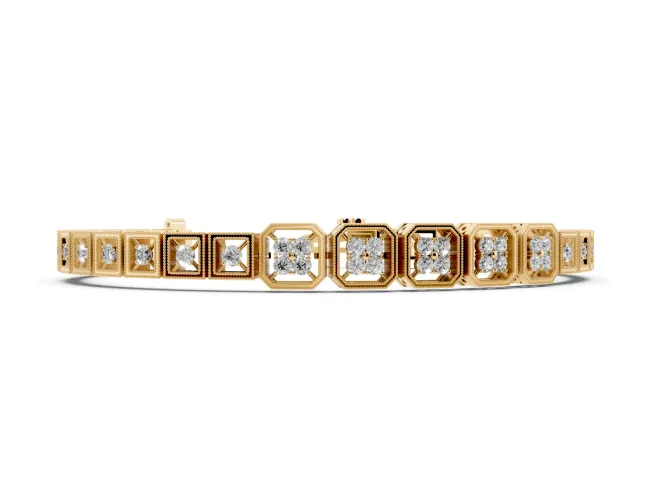
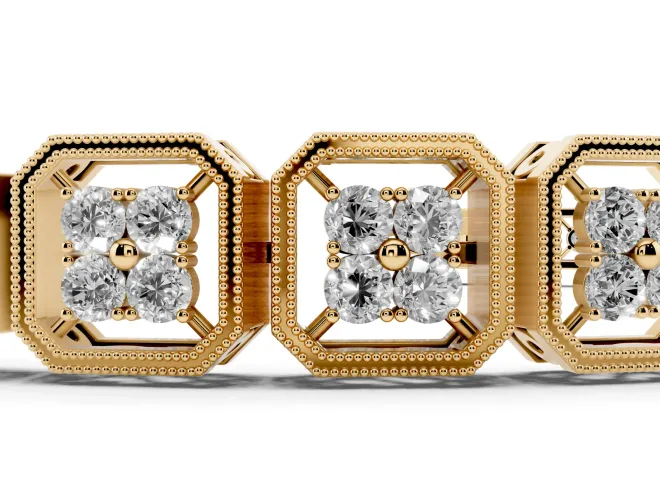
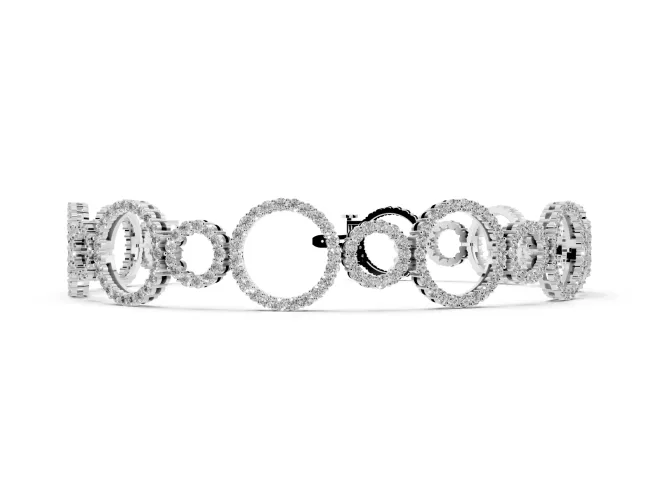
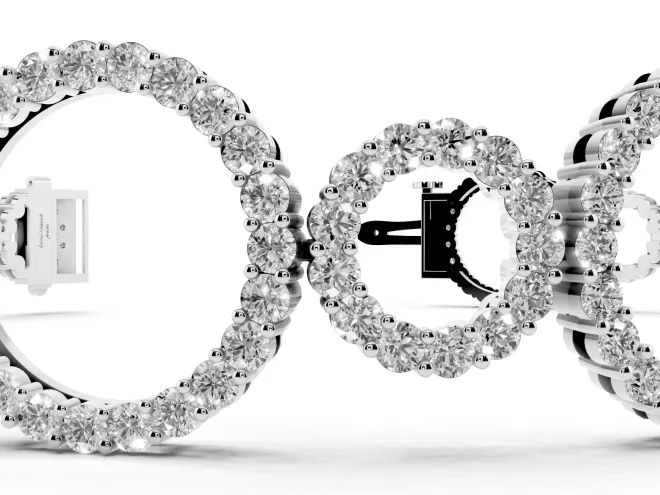
One unbroken line of light at the wrist. Each lab-grown diamond tennis bracelet here links stone to stone in prongs, bezels, channels or clustered stations. On the product page you set the metal, the gold karat and a weight between 3 and 15 carats. Rounds lead the range, with some emerald and princess cuts for a crisper outline.

$2,403 $4,806
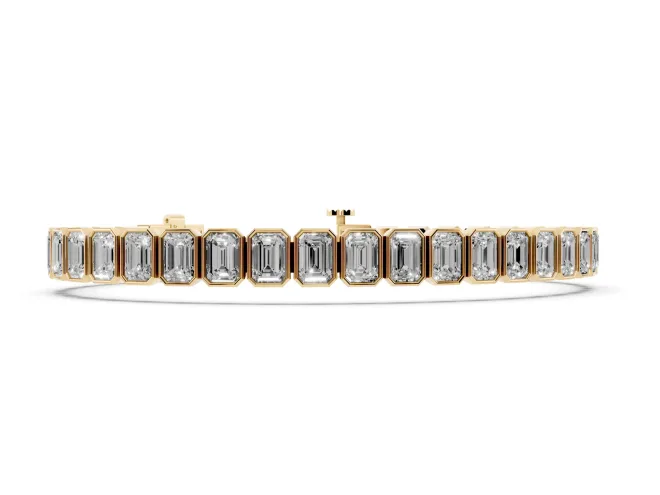
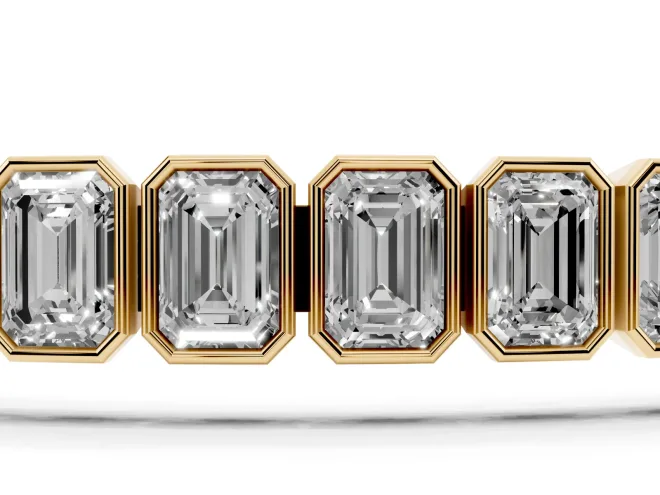
$2,909 $5,818
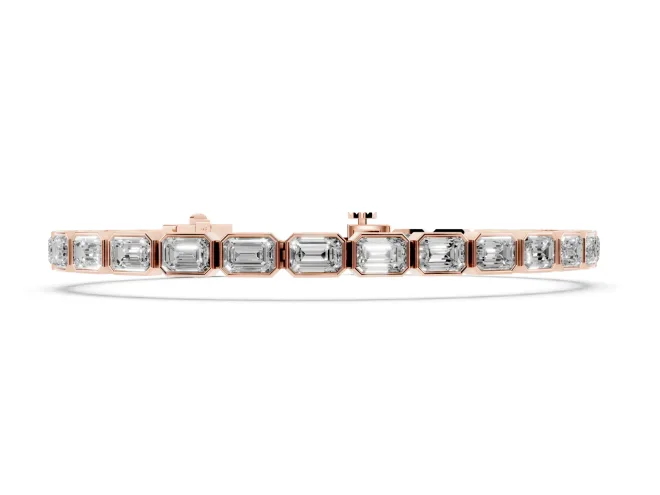
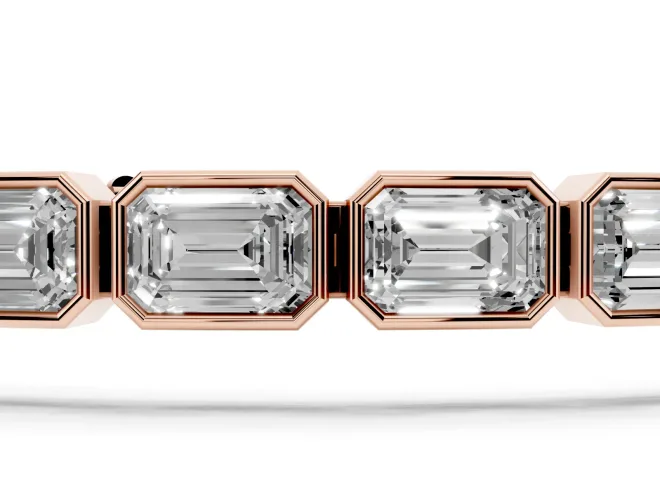
$2,183 $4,366
$4,391 $8,782

$3,305 $6,610
$4,392 $8,784
$5,782 $11,564
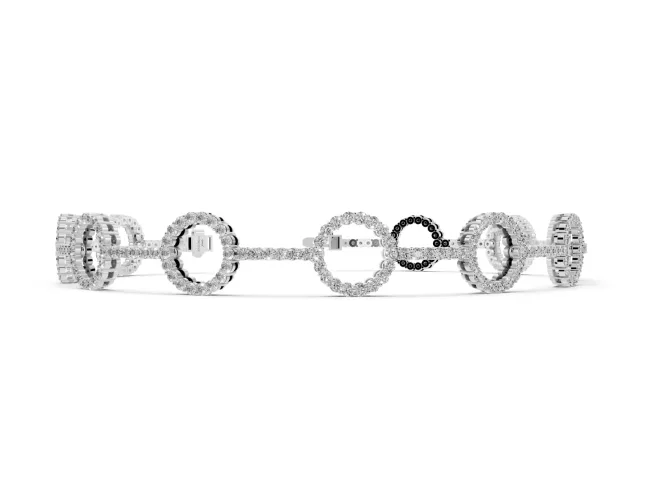
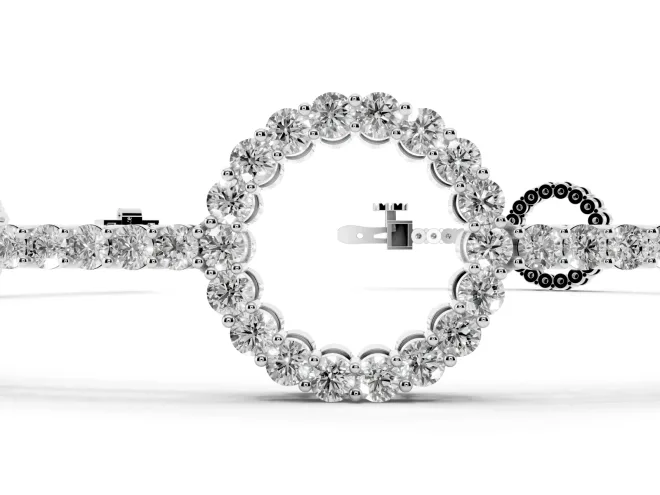
$5,232 $10,464
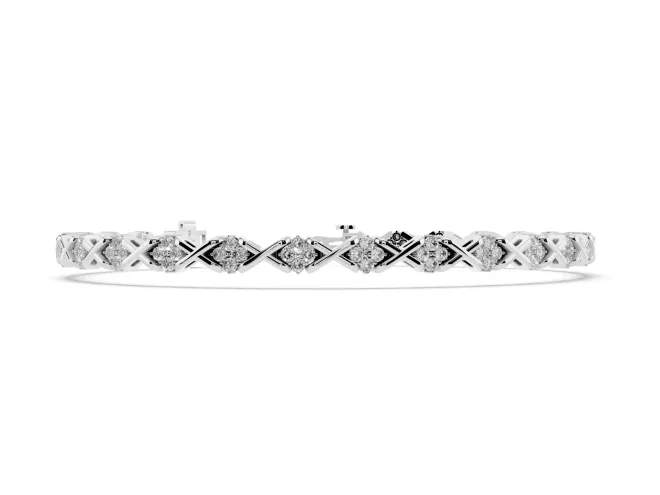
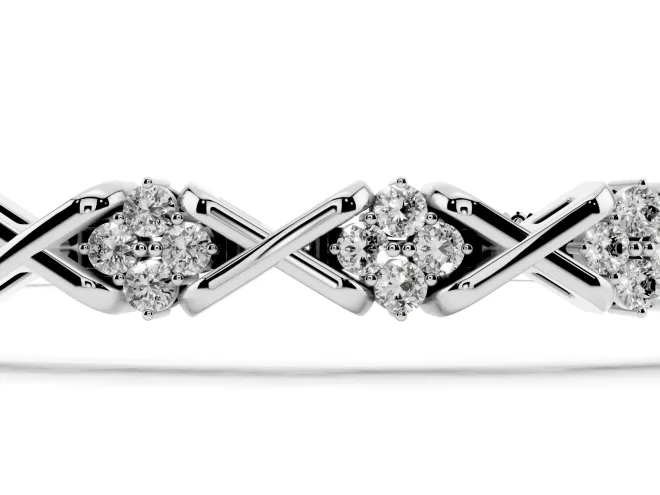
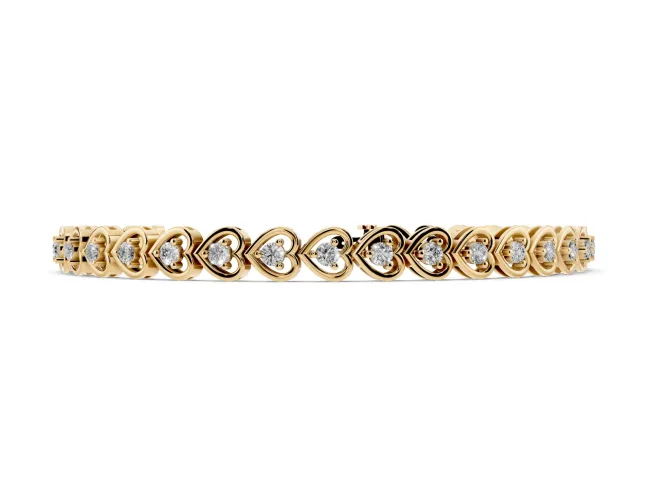
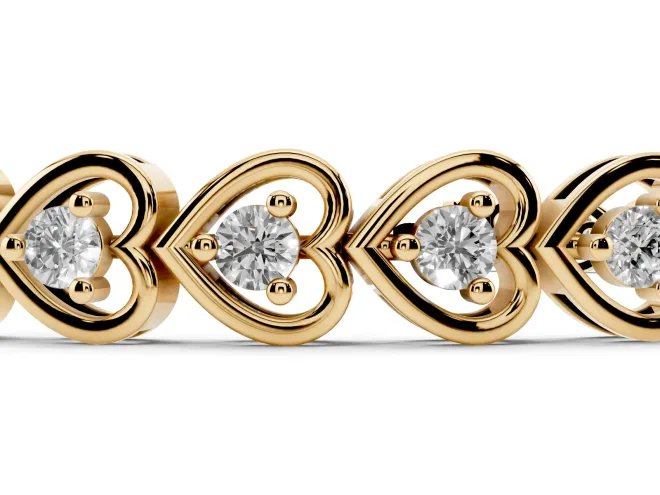
$5,392 $10,784
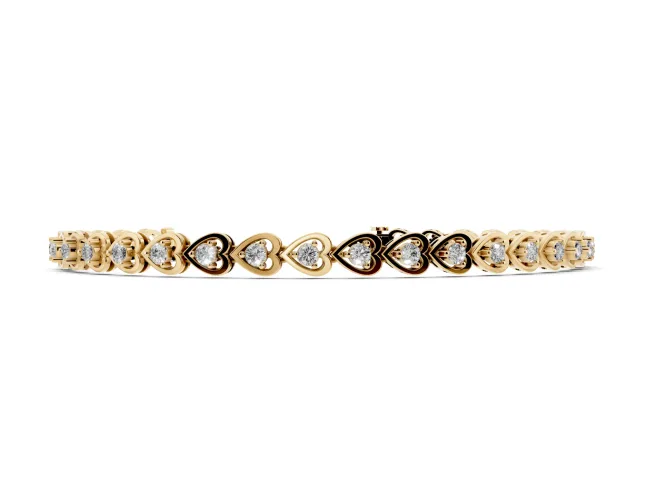
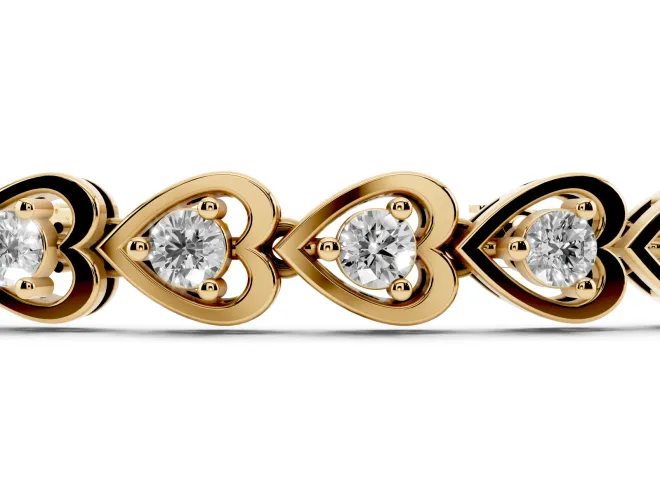
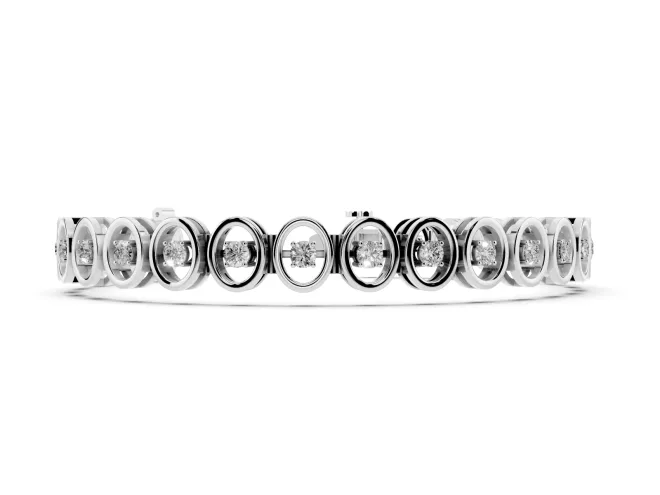
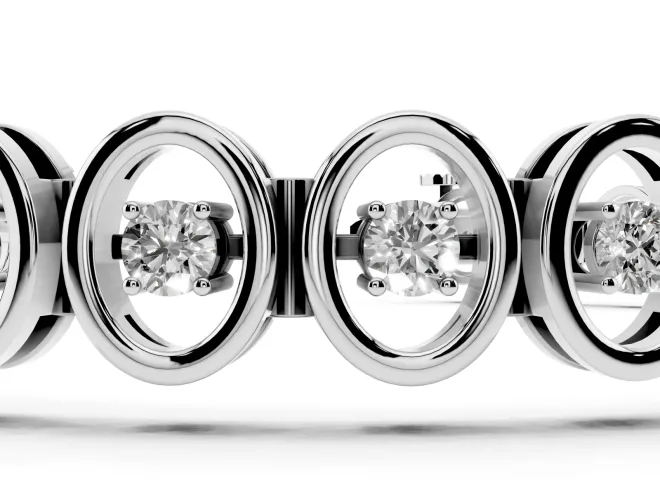
Showing 1–14 of 54
How each stone is held
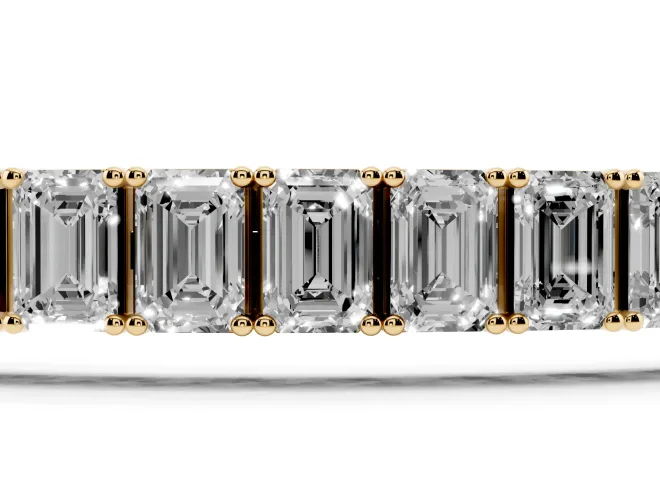
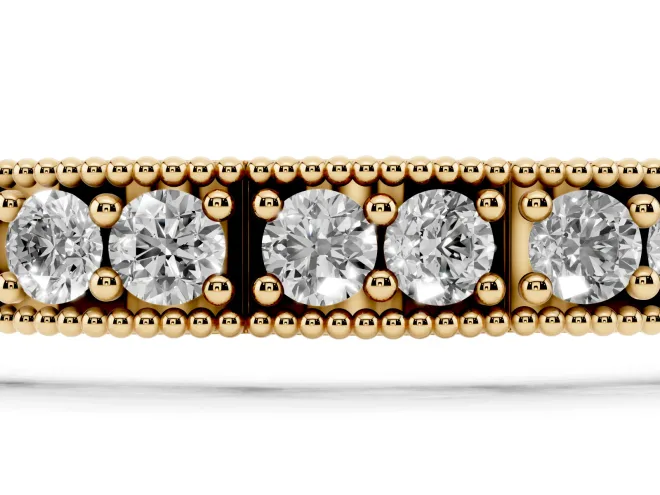
- Four prongs: the classic tennis bracelet for women, with the most stone on show.
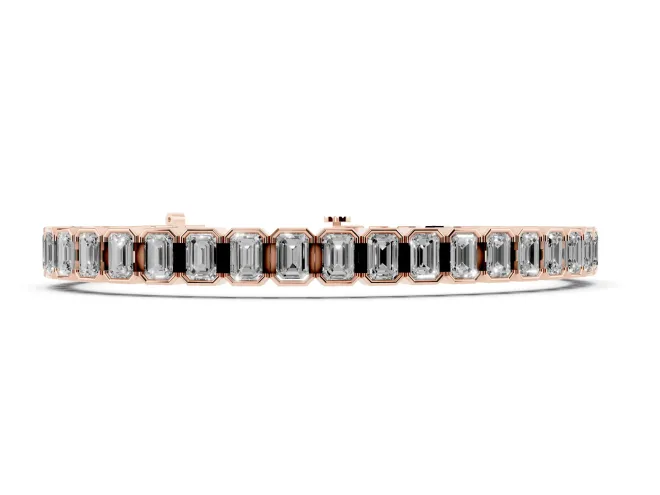
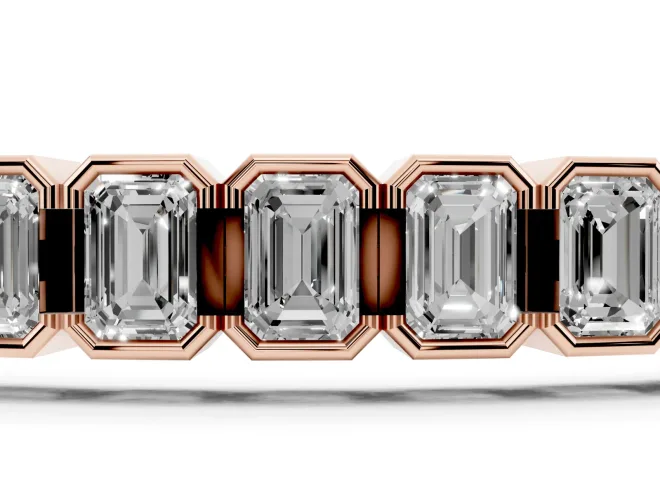
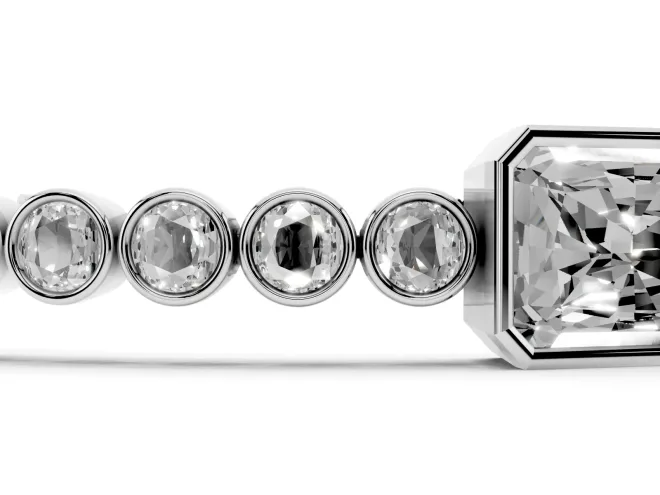
- Bezel cups: a thin metal ring around every stone, kind to sweaters.
- Clusters: small stones gathered into clover or flower stations.
Gold karat or Silvadium
Gold versions come in 10K or 14K, white, yellow or rose. Silvadium, a sterling silver made to resist tarnish, brings the price down. White metals push the stones toward icy; yellow and rose warm the whole line.
Weight, color, clarity
Carat here means the combined weight across the bracelet, and most designs run 3 to 15 ct tw. Heavier options swap in bigger stones rather than adding links. On grade, choose between E-F and F-G color, then between VVS-VS and VS-SI clarity, trading spend on size against spend on grade.
Clasp checks and cleaning
Every few weeks, test that the box clasp clicks and the safety latch closes. Leave the bracelet off for tennis, golf and heavy lifting. Hand lotion collects behind each stone; a sink of mild suds and a gentle brush lift it; store it flat in a lined case.
Lab-Grown Diamond Tennis Bracelets: Common Questions
What is the best color for a diamond tennis bracelet?
Near-colorless, because a long row shows a tint sooner than one stone does. These bracelets come in E-F or F-G color, both of which face up white. E-F looks iciest beside white gold or silver, while F-G is a sensible saving in yellow or rose gold.
Should a tennis bracelet be gold or silver?
Either; it comes down to budget and how often you wear it. Gold, here 10K or 14K, is harder and keeps its polish longer. Silver costs less and suits occasional wear, with Silvadium slowing tarnish. Match whichever metal your watch or rings already use.
Should a tennis bracelet be snug or loose?
A little loose. Leave space for one finger between bracelet and wrist so it moves freely without slipping over the hand. Too tight strains the links and clasp; too loose lets it snag on desk edges. Measure the wrist and add about half an inch.
What is the best diamond shape for a tennis bracelet?
Round, for most people: brilliant rounds throw the most sparkle and line up evenly, which is why rounds lead this range. Emerald cuts give long, mirror-like flashes and a sleeker look, while princess cuts sit corner to corner in a channel for a solid band of light.
What is the standard size of a tennis bracelet?
Around 7 inches is the usual length for women, followed by 6.5 and 7.5. Measure the wrist and add roughly half an inch. Bracelets can't be resized, so a different length means the piece is remade, which takes 10–15 days.